


Fewer Hands. Closer Scrutiny. Modular Plants Are Being Squeezed.
Fewer Hands. Closer Scrutiny. Modular Plants Are Being Squeezed.
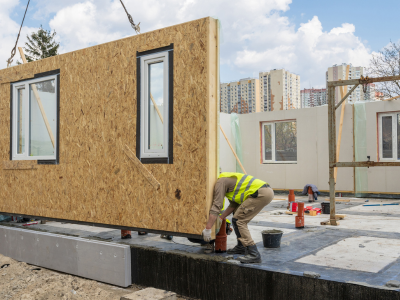
Modular sells itself on factory-controlled safety and predictability. Right now, two forces are testing both.
OSHA's amputations emphasis program now lists prefabricated wood building and manufactured home plants among its targets for programmed inspections. And construction needs an estimated 349,000 net new workers this year, according to ABC, in a market where hiring is already hard.
Here's the twist. Neither problem is about the product. Both are about what happens on your floor, shift after shift.
OSHA's List and the Labor Gap: 2 Pressures Facing Modular Plants

Modular's pitch is that factories are safer, steadier and more predictable than job sites. Offsite construction is still just 3% of U.S. single-family completions, according to NAHB, and the plants trying to grow that share are being tested on both counts.
Pressure 1: Your industry is on OSHA's list.
OSHA renewed its National Emphasis Program on Amputations in Manufacturing in 2025 (effective June 27, 2025, for five years). It covers 91 manufacturing industries, and prefabricated wood building and manufactured home manufacturing are new additions versus the 2019 version. Truss, wood window and door, and prefabricated metal building plants are on the list too.
What inspectors look at: machine guarding, lockout/tagout, and what happens during setup, jam-clearing, adjustment, cleaning and maintenance. They also review your injury logs for the current and prior three years.
What it can cost: up to $16,550 per serious violation and up to $165,514 per willful or repeat violation in 2026.
Why indoors isn't a free pass: in 2024, wood product manufacturing (the category that includes prefab wood buildings) logged 3.9 recordable cases per 100 full-time workers, versus 2.3 across private industry, according to BLS.
Pressure 2: Fewer hands.
ABC estimates construction must attract 349,000 net new workers in 2026 and 456,000 in 2027 just to keep labor supply and demand in balance. It points to retirements, tighter immigration enforcement and megaproject demand as drivers. Factories recruit from many of the same trades.
Read the fine print:
The program applies by NAICS code, so how your plant is classified matters.
Participants in OSHA's Voluntary Protection Program are exempt from these programmed inspections, and state-plan states run their own programs.
Penalty figures are maximums, not typical fines.
Our read: Compliance and hiring used to be separate problems. On the factory floor, they increasingly meet at the same spot: the people working beside moving machinery. Neither pressure is going away.
Fewer People at the Point of Operation: 3 Automation Trends in Modular
So how are plants responding? Increasingly, by automating the stations where those two pressures meet. Three shifts show how:
1. Whole lines, not single machines: Autovol, Nampa, Idaho
Autovol's 400,000-square-foot factory opened with 63 robots. Its CEO said in 2022 that automation covered about 30% of production, with a goal of 45%. The company claims one plant can out-build a traditional modular facility two to three times over, with less than half the labor hours.
2. Vision for imperfect inputs: BotBuilt
Framing is where wood fights back: studs bow and lumber varies. BotBuilt pairs software that converts plans into machine instructions with computer vision that adjusts for imperfect lumber. It runs second-hand automotive robots in pairs, where a panel crew would typically be four or five people.
3. Machines do the cutting and nailing: Blueprint Robotics, Baltimore
In a 200,000-square-foot plant, robotic machines cut, nail, screw, trim and drill wall, floor and roof panels, the kind of point-of-operation work inspectors look at first. CEO Jerry Smalley sums up the pitch: "more precise, higher quality, less cost, less risk."
The factory-floor takeaway: Every station a robot runs is one fewer to staff and one fewer where a person stands at the point of operation. Robots aren't a compliance shortcut, though. Guarding and lockout/tagout still apply, and OSHA's Technical Manual covers robot systems and collaborative applications. As robotics veteran Yudhistir Gauli puts it, "We shouldn't aim for total automation." Start with the station that hurts most.
42 Window Patterns. 30–40% Less Time with Consistent Quality.
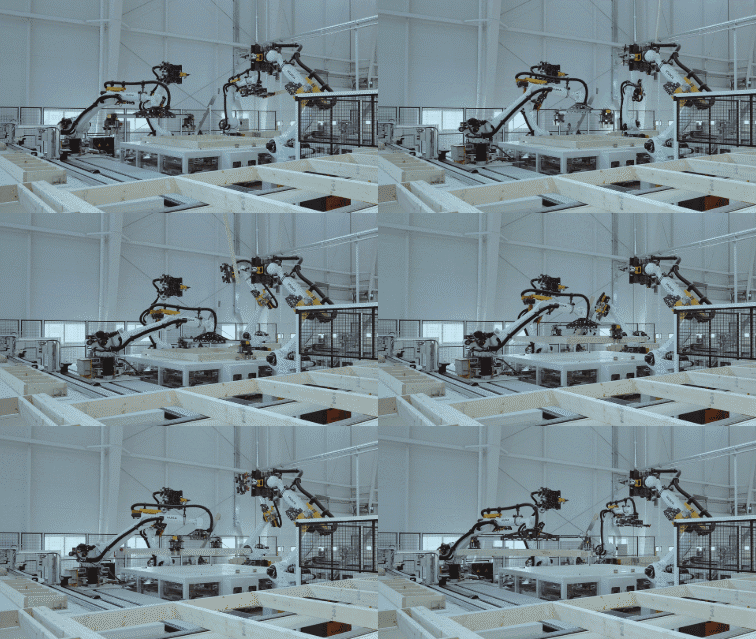
A window frame is a labor problem hiding in plain sight: repetitive, different on every order, and dependent on skilled hands. Korea's Space Factory automated it, and built what it calls the country's first automated window-assembly solution for modular housing.
The Problem: Skilled workers assembled window frames by hand. It was slow and labor-intensive, and meeting varied client specifications took a large crew. On a wide, complex floor, real-time monitoring and process control were hard.
The Fix: One robotic cell instead of a bigger crew:
KUKA KR 210 R3100 industrial robot (210 kg payload, 3,065 mm reach) handles the heavy, high-precision work.
Custom-designed gripper aligns and moves the wooden members.
High-payload track motion carries parts along the line, from material input through upper and lower component assembly to frame transfer.
The Result:
30–40% less work time than manual assembly
42 window patterns from one cell, so custom orders stay flexible
Stable quality regardless of worker experience, with lower defect rates and construction costs
Real-time robot monitoring for fast issue response
A small team can now mass-produce a wide range of wooden windows in a short period
Space Factory's own summary: "By automating the window assembly process, we were able to maintain consistent quality while significantly reducing construction time and cost."
The lesson: Start where labor, variation and handling overlap. A window frame is all three. In the U.S., wood window and door manufacturing sits on OSHA's amputation list too.
Future-Proof Your Shop Floor with Bigwave Robotics
The window assembly cell above was built by Bigwave Robotics. Whether your plant is ramping volume, adding custom options, or standardizing a high-mix line, rigid automation can no longer keep pace with rising labor costs and tighter scrutiny. Bigwave pairs standardized modular robotic cells with intelligent simulation validation and real-time operational software, so factories can de-risk deployment, protect margins and keep production stable.
Stay Updated on Industry Trends
👉 Join our LinkedIn Newsletter
📰 Read the OSHA Directive: National Emphasis Program on Amputations in Manufacturing (CPL 03-00-027)
📰 Read OSHA's 2026 Civil Penalty Adjustments
📰 Read ABC's 2026 Construction Workforce Analysis
📰 Read BLS: Carpenters, Occupational Outlook Handbook
📰 Read NAHB: Modular and Other Non-Site Built Housing Market Share in 2024
📰 Read OSHA Technical Manual: Industrial Robot Systems and Safety
📰 Read Offsite Builder: Robotics With a Purpose