


Stacking 60-lb Cases Manually? Why a 105% Robot Surge and OSHA Audits Demand Immediate End-of-Line Action
Stacking 60-lb Cases Manually? Why a 105% Robot Surge and OSHA Audits Demand Immediate End-of-Line Action
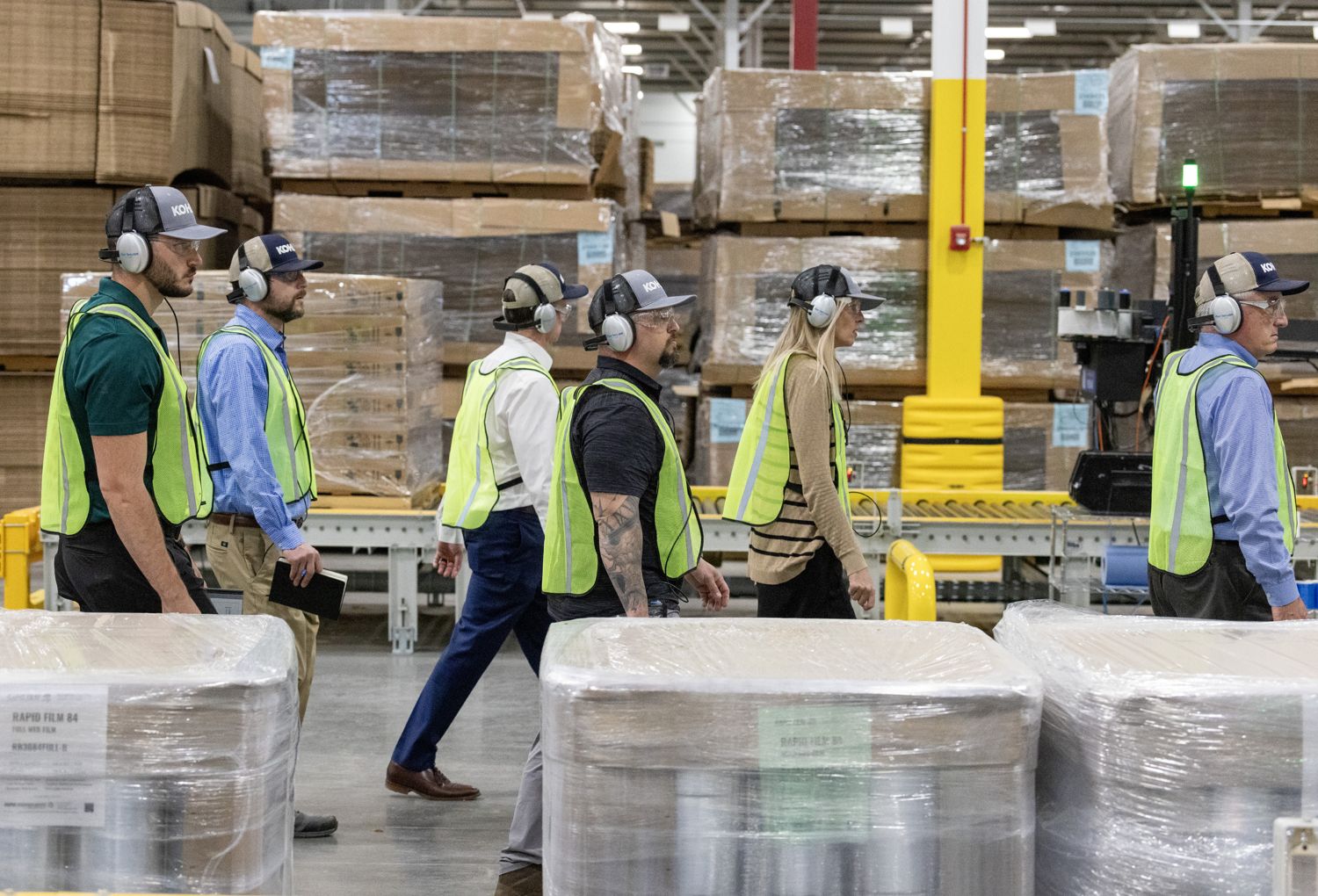
This unprecedented investment wave is not merely about incremental productivity. Across food and beverage processing facilities, the end of the packaging line has reached an operational breaking point. As consumer preferences push product catalogs from 4 legacy formats to 12 or more regional, seasonal, and package variants, production floors face a severe dual squeeze: compounding changeover downtime and tightening OSHA ergonomic oversight over repetitive manual heavy lifting.
Facilities that continue to rely on manual case handling or rigid, legacy machinery risk spiraling turnover, costly freight damage, and severe regulatory audits. Modernizing end-of-line packaging is no longer just a cost-cutting tactic—it is a vital operational stability strategy.
The End-of-Line Breaking Point: SKU Growth Meets Severe Labor Limits
Case packing, palletizing, and stretch wrapping represent the final checkpoints before goods exit a manufacturing facility. They are also the exact operations most vulnerable to format variations and labor volatility:
Sustained Physical Strain & OSHA Scrutiny: Palletizing requires operators to lift and stack 50 to 60-lb cases repeatedly across 8-to-10-hour shifts. This grueling physical toll fuels perpetual employee turnover and exposes facilities to escalating OSHA musculoskeletal disorder (MSD) audits and worker compensation claims.
Compound Changeover Downtime: A decade ago, packaging lines ran four standard formats; today, plants routinely cycle through a dozen SKU variants per shift. In a manual operation, each format adjustment requires operators to physically realign rail guides, adjust sensors, and recalibrate stacking recipes. Taking 20 to 60 minutes per changeover quickly compounds into massive throughput losses.
Fatigue-Driven Quality Failures: In transit, pallet stability depends entirely on consistent, tight stacking. When operators tire toward the middle or end of a shift, stacking uniformity degrades. The result is unstable pallet stacks, transit collapses, damaged shipments, and chargebacks from retail distribution centers.
Relying on manual labor to absorb SKU proliferation has shifted from an operational inconvenience to an existential business liability.
👉 [ Assess Your Palletizing Ergonomics ]
Beyond Labor Replacement: 80,000+ Hour Reliability and Software Flexibility
Forward-thinking F&B manufacturers are moving past the outdated view of robotics as a simple head-count reduction tool. Instead, they are deploying automated palletizing cells as foundational infrastructure for operational resilience.
Modern robotic systems eliminate human physical limitations while providing unprecedented flexibility:
Uninterrupted Shift Consistency: Industrial palletizing robots operate with a Mean Time Between Failures (MTBF) ranging from 80,000 to 100,000 hours. Unlike fatigued human crews, robotic cells place every box with sub-millimeter precision, guaranteeing 100% pallet load integrity from the first minute of the shift to the last.
Instant, Recipe-Driven Changeovers: Leading robotic cells replace manual wrench adjustments with intuitive Human-Machine Interface (HMI) software. Plant operators can generate, store, and call up new pallet stacking patterns in seconds without requiring outside service technicians or extended line shutdowns.
Rapid Financial Payback: In high-volume packaging plants running extended shifts or frequent overtime, automated case packing and palletizing cells routinely achieve full payback within 12 to 24 months.
High-Payload Automation in Action: Automated Heavy Beverage Palletizing
Transitioning to automated end-of-line packaging does not require multi-vendor complexity or months of costly production interruptions.
Consider a recent deployment engineered by Bigwave Robotics: an Automated Heavy Beverage Box Palletizing System installed for a high-volume beverage manufacturer handling heavy 60-lb cases:
The Challenge
The plant processed continuous high-volume runs of heavy beverage boxes weighing up to 60 lbs each. Manual stacking across multiple daily shifts resulted in severe musculoskeletal fatigue, acute worker retention problems, and frequent stacking inconsistencies that led to transit pallet failure.
The Solution: High-Duty Articulated Robotics & Synchronized Tooling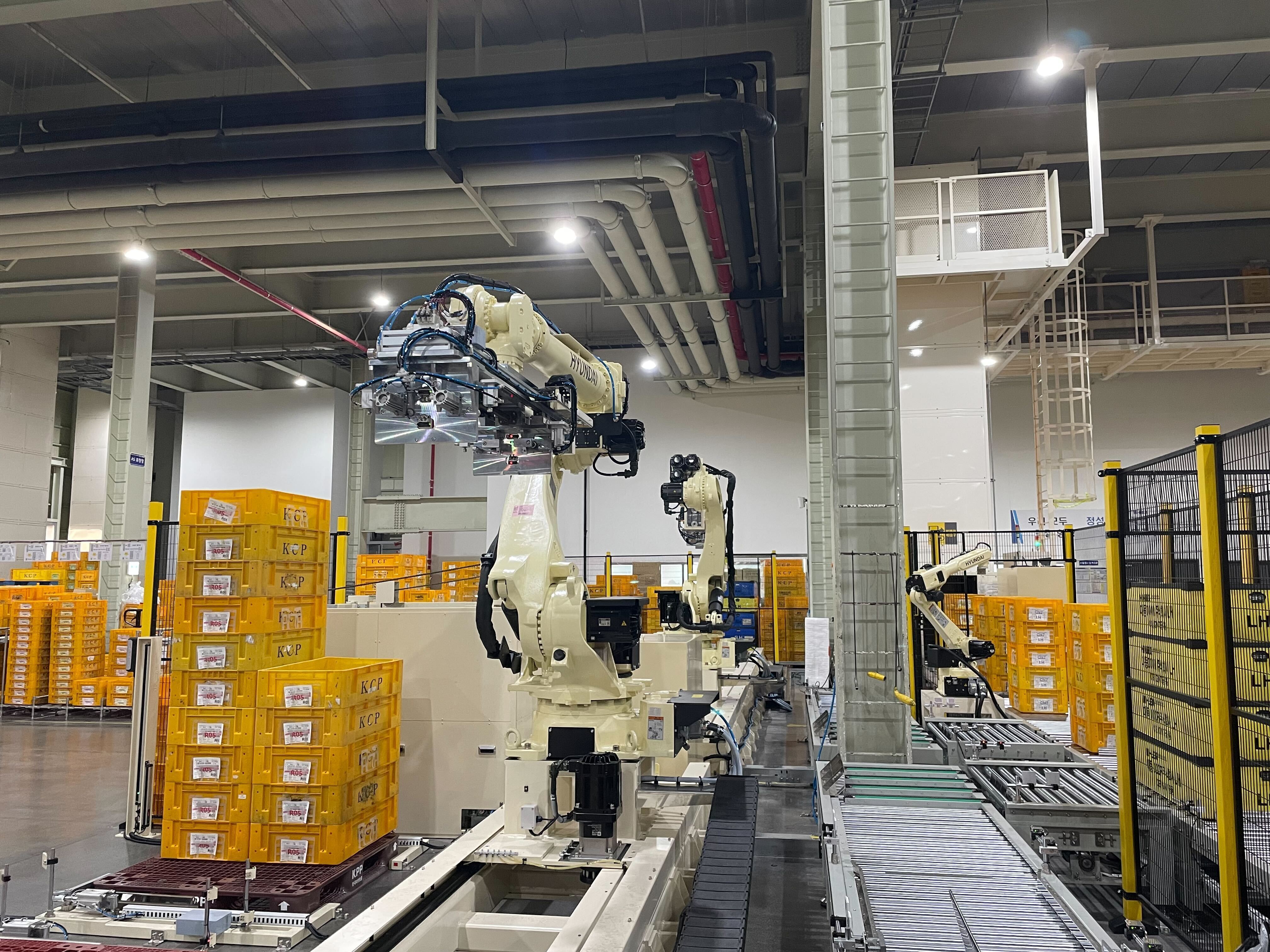
Bigwave Robotics deployed a heavy-payload robotic palletizing cell anchored by a Comau PAL-180-3.1 4-axis articulated robot, featuring a 180 kg payload capacity and a 3,100 mm reach:
Eliminating Musculoskeletal Hazards: By replacing continuous manual heavy lifting with the 4-axis high-duty articulated robot, the facility eliminated ergonomic injury risks, achieving 100% workplace safety compliance and zero industrial accidents.
Dual-Gripper Stacking Precision: Bigwave engineered an integrated end-of-arm tool (EOAT) pairing pneumatic case clamps with synchronized vacuum suction cups. The robot picks and places heavy boxes with pinpoint alignment, then automatically retrieves and places protective paper slip-sheets between layers to ensure transport stability.
Continuous Line Flow with Zero Idle Time: Infeed conveyors automatically align cases into optimal pick positions, allowing the robot to cycle continuously without line pauses, maximizing hourly pallet throughput.
Key Results
100% Workplace Safety: Completely eliminated manual lifting risks, reaching zero accident records.
Flawless Load Integrity: Guaranteed uniform stacking geometries and slip-sheet placement, eliminating shipping damage.
Rapid Payback: Delivered a full capital investment recovery within just 1.1 years.
Modernize Your Packaging Floor with Bigwave Robotics
Whether your facility is grappling with tightening OSHA ergonomics rules, relentless SKU expansions, or unstable packing crew staffing, manual palletizing can no longer keep pace with modern production targets.
Bigwave Robotics removes the friction, engineering risk, and multi-vendor delays of conventional automation. By pairing pre-engineered, modular robotic cells with intelligent control and simulation validation, we help food and beverage processors stabilize their end of the line, protect their workforce, and achieve rapid payback.
👉 [ Request a Turnkey Palletizing Cell Proposal within 48 Hours ]
Want to explore the original industry analysis?
Read the full report on how food manufacturers are adapting to SKU proliferation and tighter packaging labor markets.