


Michigan LIFT Explained: How Ford's $1B in Purchase Orders Meets JPMorgan Capital, and What Your Plant Needs to Qualify
Michigan LIFT Explained: How Ford's $1B in Purchase Orders Meets JPMorgan Capital, and What Your Plant Needs to Qualify
 The money is organized. The question is which plants will be fundable.
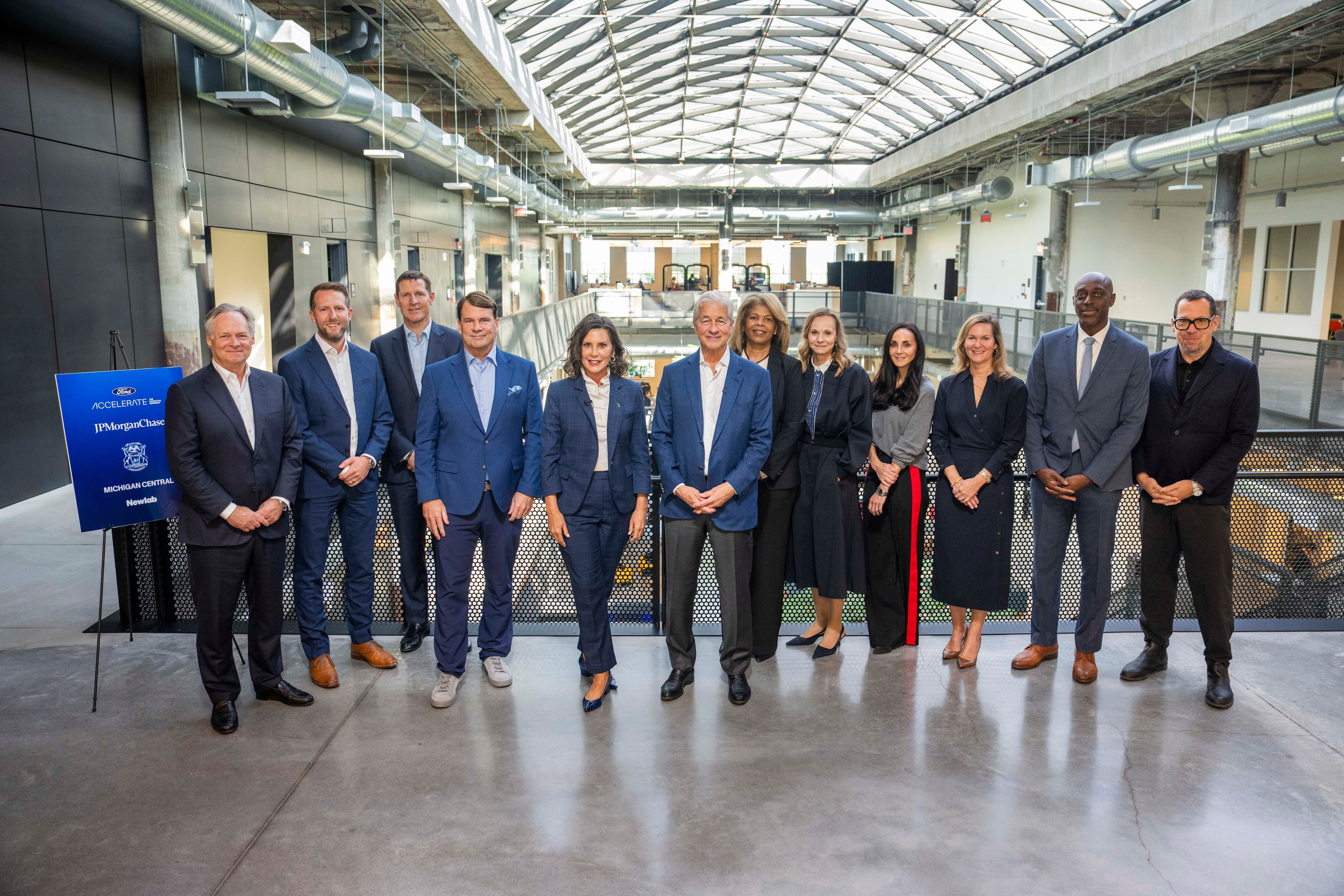
On September 29, Detroit launched Michigan LIFT, a public-private platform pairing Ford's supplier contracts with JPMorganChase debt financing. For component manufacturers, it could shorten the path from a signed contract to a funded production line. But the orders won't go to the best pitch. They'll go to plants that can show zero-defect, high-volume production.
What's inside:
The deal: $1B in Ford orders. $1B in JPMorgan debt.
The path: 4 steps from Open Call to funded line.
The catch: Who qualifies, and the fine print.
The bar: What BMW, Hyundai and Ford already run on their floors.
The proof: An EV heater line. Unmanned, 24/7, paid back in 24 months.
The move: What to fix on your floor first.
What Is Michigan LIFT?
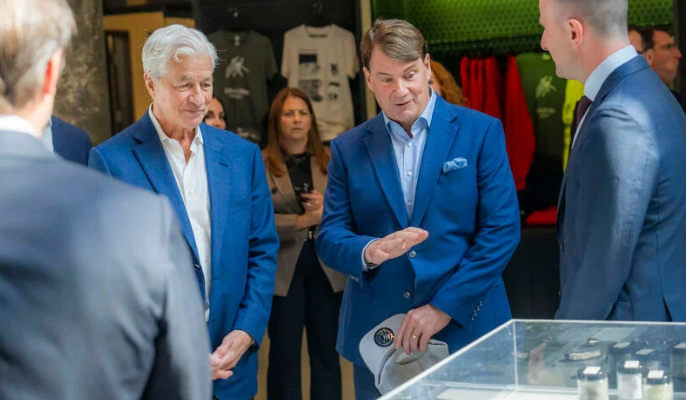
Michigan LIFT is a platform built by Ford, JPMorganChase, the State of Michigan, Michigan Central and Newlab. It connects industrial buyers with suppliers that have proven technology but can't yet secure the financing, workforce or customer commitment to scale. Per the official launch announcement, the effort grew out of the Michigan Resiliency Summit held in June and connects to JPMorganChase's $1.5 trillion Security and Resiliency Initiative.
The paradox LIFT is built to break
Suppliers have lived with this for years. OEMs won't award volume until you prove you can make it. Banks won't fund the tooling until you hold the contract. Everyone waits. Nobody scales. Ford's Liz Door described the problem in Ford's own post on the initiative:
"Here's a problem every new manufacturer knows too well: There's a supplier out there with exactly the technology you need. They just can't get the financing, the workforce, or the customer to scale up and prove it. That's the gap Michigan LIFT is built to close."
The deal at a glance (over the next decade)
Ford: aims to award up to $1B in supplier contracts as anchor buyer
JPMorganChase: aims to provide up to $1B in debt financing to suppliers on the platform
Michigan Central, Newlab and MEDC: aim to recruit 10–20 more industrial buyers, targeting $1B+ in annual demand by 2036
Newlab: $20M in in-kind commercialization support
In practice, this makes the OEM purchase order the asset lenders look at. Your balance sheet stops being the only bottleneck, and tooling no longer has to come out of your own cash reserves.
The 4-Step Path: From Open Call to Funded Line
Buyers post manufacturing challenges as "Open Calls."
Suppliers respond at michiganlift.org.
Qualified applicants are referred to the buyer for evaluation.
Financing and state support follow for the opportunities that move forward.
Priority areas: robotics and advanced automation, advanced mobility and propulsion, critical components, and battery storage.
The fine print
The figures are stated ambitions, not guaranteed funds.
Everything is subject to each participant's standard qualification, sourcing and approval processes.
The platform targets suppliers seeking to establish or expand production in Michigan. Buyers can be based anywhere.
Our read: For legacy component makers, this is the cleanest route yet out of a shrinking ICE book and into electrified, high-margin hardware. The capital is lined up. The remaining variable is you.
Quick answers
Is the $1B guaranteed? No. Both the Ford contract and JPMorganChase financing figures are goals, and each opportunity goes through standard approvals.
Do I need to be in Michigan? The platform is aimed at suppliers expanding production in Michigan. Check the Open Call terms for specifics.
What are buyers looking for? Per Newlab's Liz Keen, LIFT offers "a structured pathway to customer validation, investment, and production at scale." Validation happens on your floor, which is the next section.
Prototype Shop vs. Volume Supplier: 3 Benchmarks
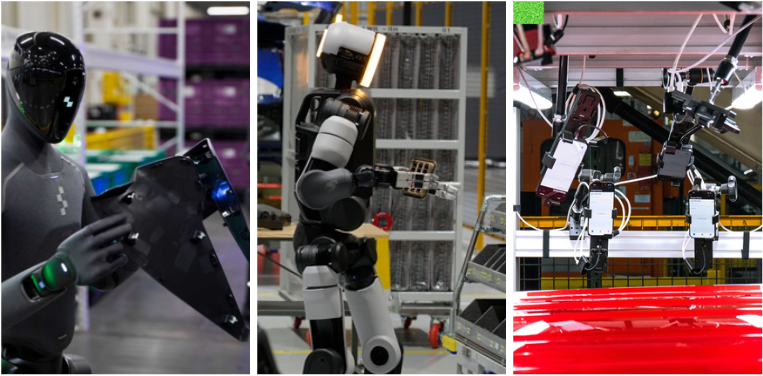
A prototype proves you can build one. An audit proves you can build fifty thousand. The standard you'll be measured against is already being set inside OEM plants, and it increasingly includes physical AI: robots that see, decide and move on the line.
1. Machines that see, then sort: BMW Spartanburg
Humanoid robots with neural-network vision pick up unoriented parts and sequence them onto delivery carts bound for the line. No kitting crew required.
(Read: BMW Group brings Figure 03 humanoid to Spartanburg (Automotive World) | Read: Figuring out humanoid logistics at Spartanburg (Automotive Logistics))
2. Humanoids in training: Hyundai Motor Group Metaplant America
Spot robots and AMRs already move through the plant. Now Atlas humanoids are learning on site: Boston Dynamics opened an application center there on September 21, starting with parts logistics and sequencing, with component assembly targeted by 2030. Hyundai is targeting 25,000 Atlas robots across its plants.
(Read: Boston Dynamics Opens Atlas Training Center at Hyundai's Georgia Metaplant | Read: Hyundai reshapes vehicle production at Metaplant America)
3. Retrofit, don't rebuild: Ford
Line-side AMRs and low-code AI vision inspection go into existing brownfield plants, checking stamped body parts in seconds.
(Read: Inside Ford's brownfield automation strategy (Automotive Manufacturing Solutions) | Read: How Ford flags assembly line defects with IBM's AI-powered inspection tools (WardsAuto))
The shop-floor takeaway: Every manual handoff is a delay, a defect risk, and a line in the audit report. Winning plants have removed them, one proven step at a time.
Case Study: High Voltage. Zero Exposure. 24-Month Payback.
Physical AI is reaching the plant floor in stages. Most suppliers won't start with humanoids. They'll start where the risk and the volume are. One EV parts maker shows what that looks like.
EV PTC Heater Automated Assembly Line
The Challenge: The manufacturer had won high-volume OEM business for EV PTC heaters, but assembly involved high-voltage, high-current steps. Manual handling put operators at risk, mis-loading drove defects, and 24/7 production was off the table.
The Solution: One coordinated robotic cell instead of station-by-station patches:
4× Hyundai Robotics YL012 cobots with integrated torque sensors work beside staff on material loading, flexible component placement and silicone dispensing.
Hyundai Robotics HH7 and HH020 industrial robots handle inter-station transfers into curing, post-cure assembly, integrated inspection and outfeed.
Pallet infeed/outfeed conveyors and transfer lines keep workpieces flowing with no idle buffers.
Key Results:
High-voltage, high-current zones run unmanned, with 100% safety compliance
Continuous 24/7 production with no added shift headcount
Sensor-guided positioning eliminated manual misalignment
Full ROI within 24 months, securing long-term OEM delivery compliance
The lesson: Humanoids will get the headlines. The payback is being made today, by robots that master the hardest step first. Automate what caps your volume, and the throughput, quality and audit story follow.
Future-Proof Your Shop Floor with Bigwave Robotics
The EV heater cell above was engineered by Bigwave Robotics. Whether your facility is moving into EV components or retooling lines for upcoming OEM programs, rigid automation can no longer support modern sourcing cycles. Bigwave pairs standardized modular robotic cells with simulation validation and real-time operational software, so suppliers can de-risk deployment, protect margins and qualify for OEM programs. Our work spans collaborative and industrial robot cells running in plants today, and humanoid applications as they mature.
Meet our engineers at The Battery Show North America 2026 (Booth #2507)
Detroit, [13-15 October, 2026]. Bring your plant layouts, cell videos, current cycle times and output targets. Our systems engineers will review them 1-on-1 and sketch modular cell options built for rapid payback and OEM qualification. You can also see live demos of precision assembly, multi-axis handling and real-time cell orchestration.
👉 [Schedule a Meeting with Bigwave Robotics]
Stay Updated on Industry Trends
👉 Join our LinkedIn Newsletter
Michigan LIFT
📰 Read the Official Michigan LIFT Launch Announcement (JPMorganChase / Business Wire)
📰 Apply or Browse Open Calls at michiganlift.org
OEM Automation Benchmarks
📰 Read: BMW Group Brings Figure 03 Humanoid to Spartanburg (Automotive World)
📰 Read: Boston Dynamics Opens Atlas Training Center at Hyundai's Georgia Metaplant (The AI Insider)
📰 Read the Full Analysis on Ford's Brownfield Robotics Strategy (Automotive Manufacturing Solutions)