


How GM & Stellantis Are Retooling for Multi-Energy Lines—And Why Flexible Automation Wins the Next Sourcing Wave
FaSTLAne 2030’s 40% Cut: Modular Automation Is Non-Negotiable
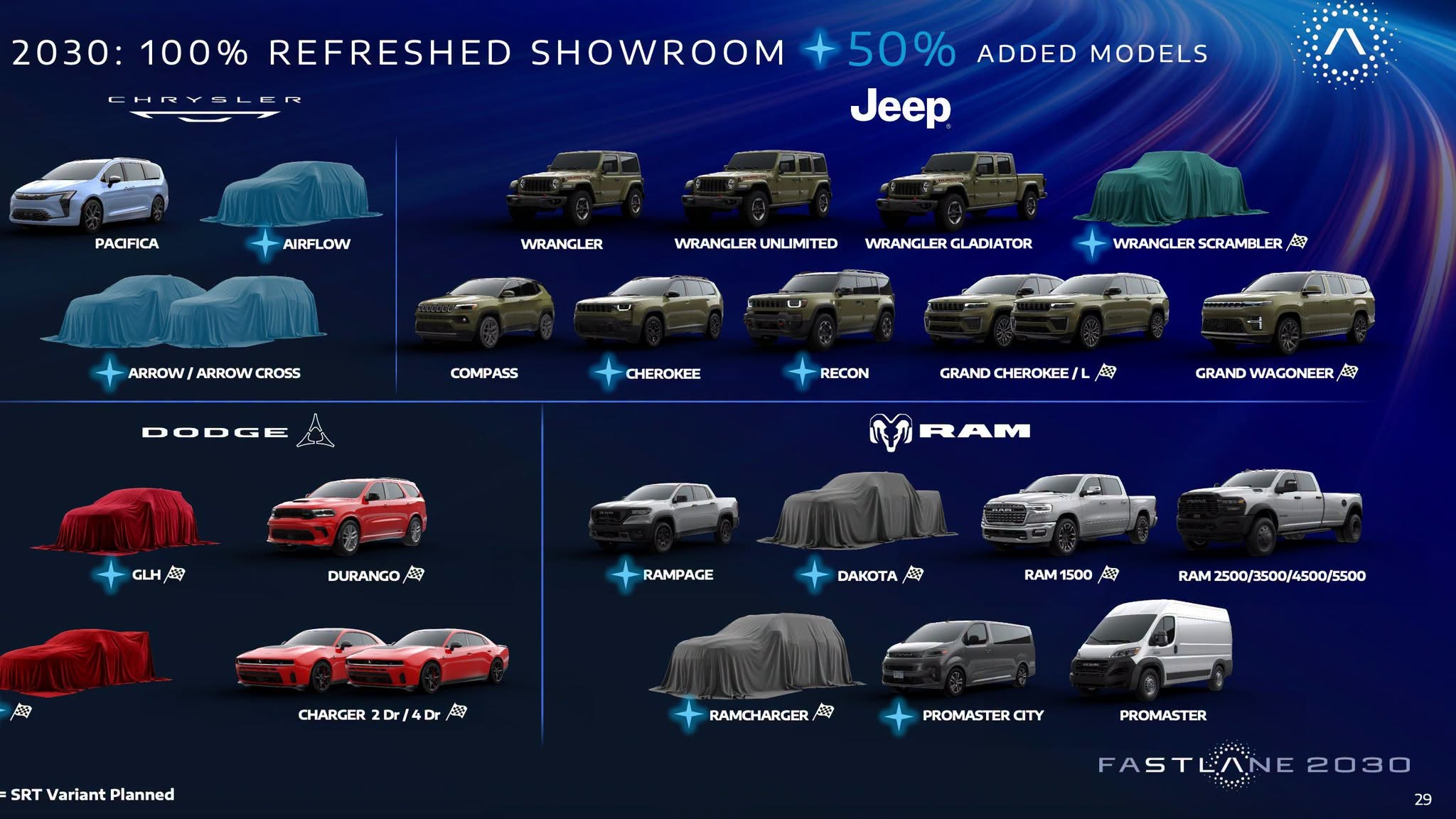
Under Stellantis’s aggressive FaSTLAne 2030 initiative, the OEM is targeting a 40% cut in vehicle development cycles—slashing launch timelines from 40 months down to just 24 months. To survive this unprecedented launch pace alongside GM’s multi-energy pivot, the global automotive manufacturing landscape is undergoing a decisive operational transformation.
Confronted with uneven electric vehicle adoption and unpredictable consumer demand across hybrid (HEV), internal combustion (ICE), and battery-electric (BEV) platforms, automakers are moving away from rigid, single-powertrain facilities. Instead, global leaders are pouring tens of billions of dollars into retooling legacy brownfield plants into agile, multi-energy production hubs.
To keep pace with this 24-month launch mandate, Tier-1 and Tier-2 component suppliers face an immediate strategic imperative: lines engineered exclusively for single vehicle programs are quickly becoming obsolete. The suppliers winning upcoming vehicle platform contracts are those deploying modular, flexible automation capable of pivoting between diverse powertrain components on the fly—without halting production or incurring multi-month retooling delays.
Highlights
Stellantis’s 40% Launch Cut: FaSTLAne 2030 slashes vehicle development cycles from 40 down to 24 months.
GM’s $1.25B Pivot: Retooling brownfield plants to flex dynamically between EV and ICE volumes.
The Modular Automation Solution: Recipe-driven cells absorb launch pressures—delivering 75% labor savings and 720 PPH output.
1 Line, 4 Powertrains: GM & STLA Are Rewriting Automotive Manufacturing
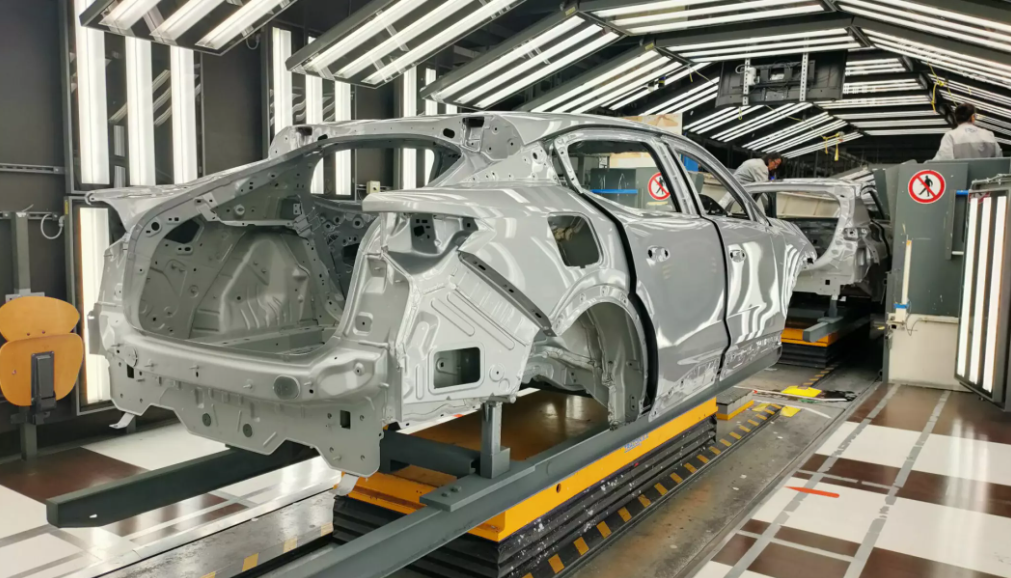
Rather than sinking capital into unproven greenfield sites, global automakers are proving that existing facilities can be modernized into high-efficiency, multi-drivetrain powerhouses. This shift is reshaping both North American and global production networks:
GM’s Agile Footprint Realignment: General Motors is reinforcing its operational flexibility by directing $1.25 billion into its Lansing manufacturing hub while directly taking over specialized supplier facilities—such as Magna’s seating and component plant in Oakland County, Michigan—to dynamically recalibrate line balance between fluctuating EV and ICE volumes.
Stellantis’s Global Multi-Energy Footprint: Across European flagship facilities including Zaragoza (Spain), Mulhouse (France), and Poissy (France), Stellantis has proven that single legacy assembly lines can simultaneously produce ICE, Hybrid, Range-Extender, and BEV architectures with seamless operational flow.
The High-Mix Sourcing Mandate: OEMs are actively prioritizing component suppliers who can mirror this flexibility. Contract awards increasingly favor suppliers whose production lines can accommodate engineering changes and variant volume swings within seconds rather than quarters.
For component manufacturers, adopting modular robotic cells transforms unpredictable OEM platform shifts from an operational liability into a long-term competitive advantage.
👉 [ Assess Your Line Agility & Sourcing Readiness ]
How Flexible Robotics and $13B in Plant Upgrades Redefine Agility
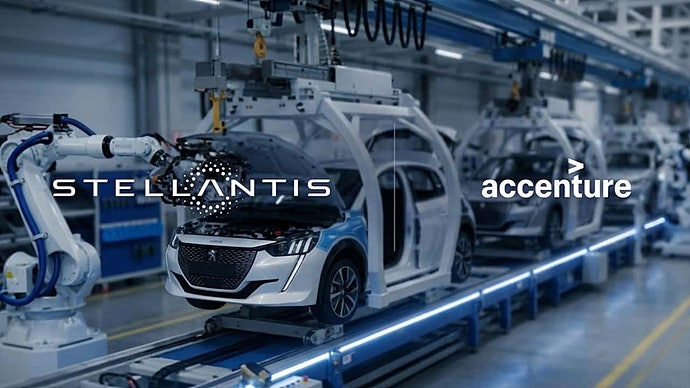
Nowhere is this multi-energy momentum more apparent than across Stellantis’s American manufacturing footprint. Backed by an aggressive $13 billion investment commitment spanning facilities in Illinois (Belvidere), Ohio (Toledo), and Michigan (Warren Truck and Detroit Assembly), Stellantis is redefining domestic plant agility.
Crucially, physical retooling is now coupled with advanced digital engineering. Through a strategic enterprise initiative alongside Accenture and NVIDIA, Stellantis is deploying AI-enabled digital twins powered by the NVIDIA Omniverse platform. By building high-fidelity virtual replicas of its production systems, Stellantis simulates line configurations, cycle times, and dynamic throughput before making a single physical modification on the shop floor.
To match this level of OEM responsiveness, forward-thinking automotive suppliers are eliminating fixed hard-tooling in favor of recipe-driven flexible automation:
Multi-Drivetrain Line Coexistence: Vision-guided robotic cells replace dedicated, single-part fixtures, allowing high-payload EV battery modules and high-precision hybrid transmission components to run through identical workcells.
Virtual Commissioning & Digital Validation: 3D digital twin simulations pre-validate robot reaches, cycle clearances, and tooling kinematics—slashing physical line commissioning timelines from several months down to a few days.
Software-Defined Recipe Switching: Shop floor technicians can shift line configurations in seconds via intuitive HMI recipe selection rather than dismantling mechanical equipment.
Proven Flexibility: From 60kg Batteries to 720 PPH Powertrain Components
Achieving agile manufacturing does not require unproven custom prototypes or multi-year integration delays.
Through pre-engineered modular robotic cells, Bigwave Robotics delivers turnkey automation across diverse automotive sectors—from heavy-duty EV/BESS battery handling to high-precision ICE and hybrid powertrain component processing:
Track 1: High-Mix Heavy Battery Palletizing (Hankook & Company)
The Challenge: Handling heavy, high-voltage battery cases weighing up to 60kg across more than 80 distinct SKU packaging patterns, compounded by severe ergonomic injury risks and staffing turnover.
The Solution: Bigwave deployed a high-payload Yaskawa GP225 6-axis robotic palletizing cell integrated with standardized multi-recipe software.
Key Results:
Standardized over 200 operational scenarios and 80+ stacking patterns.
Reallocated shop floor labor by 75% (from 4 operators down to 1) while eliminating severe musculoskeletal safety hazards.
Maintained high continuous flow supporting up to 10 pallets per minute.
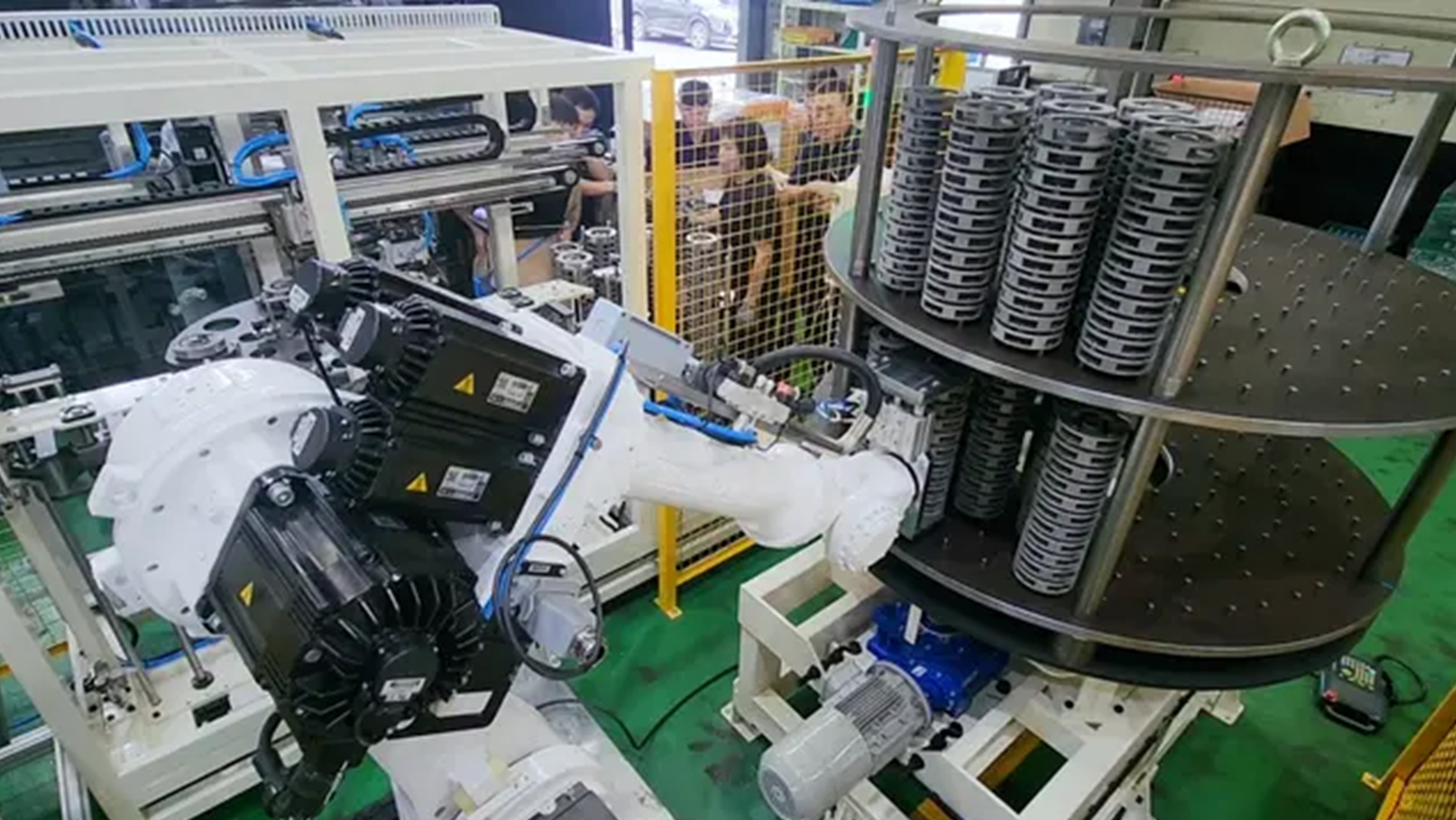
Track 2: High-Speed Powertrain Induction Hardening (Samrak Heat Treatment)
The Challenge: Meeting strict Tier-1 cycle time and zero-defect delivery SLAs for high-precision hybrid and ICE drivetrain parts requiring precise thermal induction hardening.
The Solution: Bigwave engineered a standardized automated machine-tending cell utilizing sub-second repeatability robotics and high-resolution vision positioning.
Key Results:
Achieved a continuous throughput of 720 parts per hour (PPH) with zero mechanical jamming.
Slashed part loading errors and scrap rates to near zero, safeguarding tight supplier delivery schedules.
Future-Proof Your Shop Floor with Bigwave Robotics
Whether your facility is transitioning to meet multi-energy OEM demands, ramping up battery packaging, or stabilizing high-speed component lines, rigid automation can no longer support modern sourcing cycles.
Bigwave Robotics removes the cost overruns, engineering risks, and vendor delays of traditional systems integration. By pairing standardized modular robotic cells with intelligent simulation validation and real-time operational software, we empower automotive suppliers to de-risk deployment, protect operating margins, and secure upcoming OEM programs.
Stay Updated on Industry Trends
👉 Join our LinkedIn Newsletter
📰 Read the Official Press Release on the Stellantis, Accenture & NVIDIA Strategic AI Partnership